
Stop Asking Customers to Re-Enter Their Card Every Month
How BillKey powers the automatic billing behind OTT services and subscription apps — and why it's a business lever, not just a payment feature.
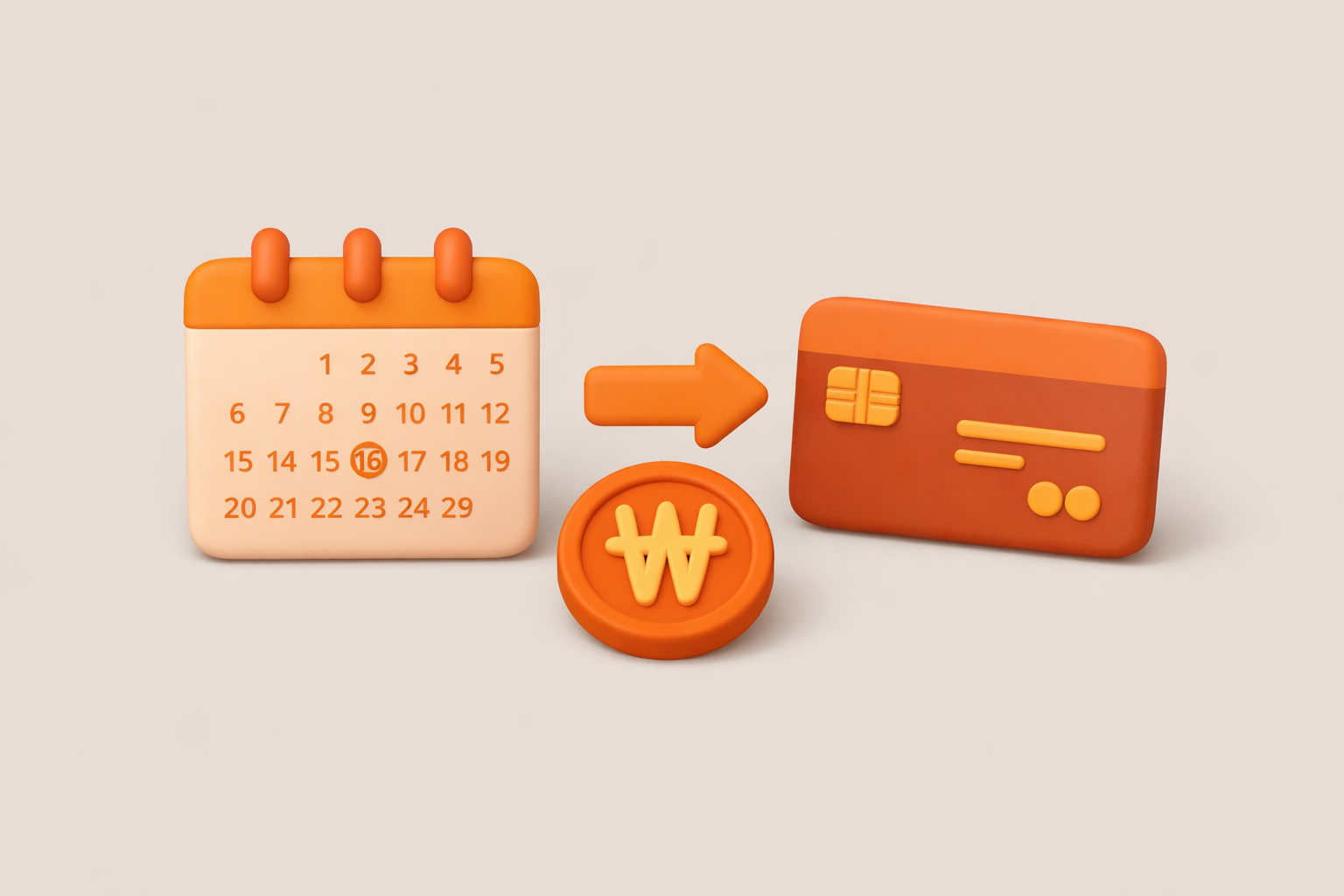
"Do I really have to type my card number in again?"
If you run a subscription service, you've heard some version of this complaint. A customer misses a payment cycle. They get a prompt to re-authenticate. And instead of completing the payment, they think: "Honestly, I'll just cancel."
Requiring payment authentication on every billing cycle is one of the biggest churn drivers in subscription businesses. Yet OTT services and music streaming apps never ask twice — register your card once, and billing just happens. The mechanism behind that experience is BillKey.
This article explains what BillKey is and how it works.
BillKey: A Payment Token That Replaces the Card
BillKey (short for Billing Key) is an encrypted token that stands in for a customer's card information.
Here's how it plays out in practice:
- A customer pays for the first time in a delivery app, authenticating with their card. (Initial card registration)
- The app receives a BillKey linked to that card and stores it. (BillKey issued)
- On every subsequent order, the customer just taps "Pay" — no card entry needed. (Payment via BillKey)
The merchant never needs to see the actual card details again. They just use the BillKey to charge.
Standard Payment vs. Recurring Payment
| Standard Payment (authenticated) | Recurring Payment (non-authenticated) | |
|---|---|---|
| Customer experience | Enter card details each time, or authenticate via app | Register once, billed automatically afterward |
| What's required | Card number, expiry date, date of birth, PIN | BillKey |
| Best for | One-off transactions requiring fresh authentication | Subscriptions, recurring delivery, deferred billing |
Is Recurring Payment the Same as BillKey Payment?
Not exactly. Recurring payment is the broader business model — automatically charging a fixed amount on a schedule. BillKey payment is the technical implementation that makes it possible without re-entering card details each time.
Recurring payment models often come with constraints: a fixed amount per cycle, validation against the previous billing period, and so on.
Tip
Which Payment Methods Support Recurring Billing?
Under the PG service, recurring payment is supported for credit cards, mobile carrier billing, and KakaoPay.
How It Works: Three Phases
Recurring payment follows three phases: Issue, Store, and Charge.
Phase 1: Issue the BillKey (Once)
- Credit card: Issue a BillKey via a zero-amount authentication, or receive a BillKey in the response after the first transaction
- Mobile carrier: BillKey is returned in the response after the first transaction
- KakaoPay: BillKey is returned in the response after the first transaction
Phase 2: Store the BillKey Securely
Once issued, the BillKey must be stored in your database, mapped to the customer record. A few things to keep in mind:
- Store it in your DB: Map it to the customer's account for future billing
- Encrypt it: BillKey carries payment authority — treat it like a credential and encrypt it at rest
Important
Phase 3: Charge Automatically on Schedule
On billing day, your server quietly issues a charge against the stored BillKey. No customer interaction required.
Why BillKey Changes the Business Equation
BillKey isn't just a payment convenience — it removes friction at the moment customers are most likely to churn.
- Convenience: Customers register once. That's it.
- Security: You never touch raw card data, which reduces your compliance scope.
- Flexibility: Flat-rate subscriptions, usage-based billing, deferred payment — BillKey supports all of them.
If your service is still prompting customers to re-authenticate every billing cycle, BillKey is worth evaluating. Reducing payment friction at renewal is one of the highest-leverage moves in subscription retention.
For integration questions, contact the technical support team at .

Need technical support?
Code Samples
HectoFinancial GitHub